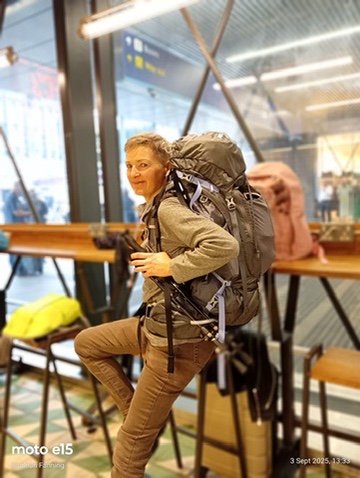
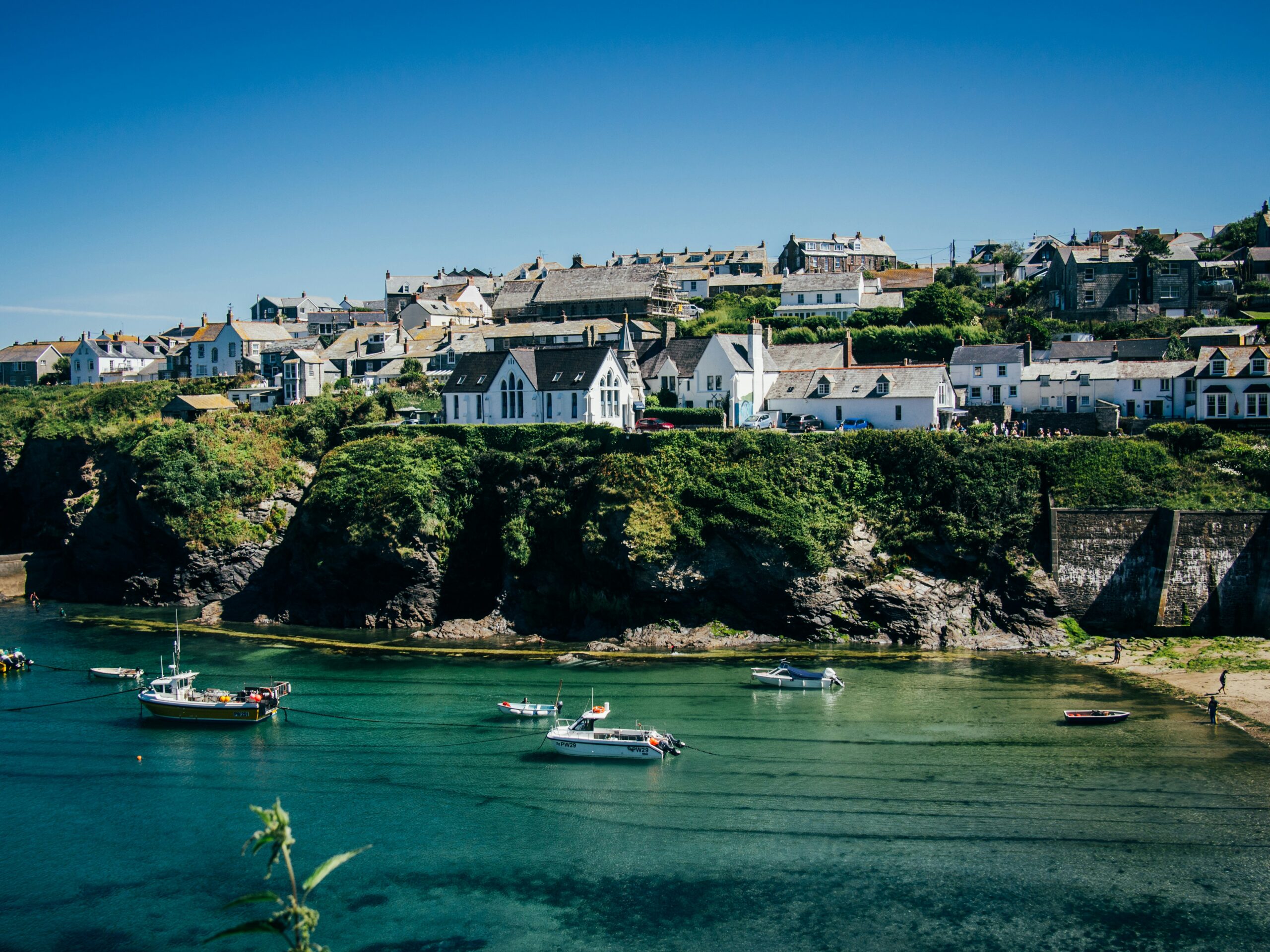
When I set off on the Cornish Celtic Way as an Adventure Queens grant winner, I carried something heavier than my rucksack – the knowledge that I wasn’t fully prepared. Life had happened, as it does. I never learned to read a map and use a compass as planned. I never carried my fully loaded backpack before departure, sidelined by sickness and holidays. But sometimes, you just have to go for it and learn along the way.
Siobhan Fanning tells her story….
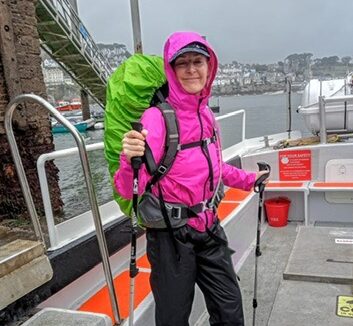
I applied for the Adventure Queens grant on the basis of invisible disability—living with Sjögren’s Syndrome, osteoporosis in my spine and left femur, and osteoarthritis in my knees, feet, and hands. My challenge may have been smaller in distance than some applicants’, but the learnings were just as big, and the confidence I gained from what my body could achieve was immeasurable.
What no one tells you about pilgrimage is the monotony. Between the Instagram-worthy coastal views and meaningful moments of connection, there’s the reality: cold rain, landscapes that blur into sameness, and the hard slog of simply putting one foot in front of the other. It’s a bit like life, really—never filled with beauty all the time, but asking you to persevere anyway.
The First Days: Weather, Wildlife, and Getting Lost
Day two brought a hundred shades of weather and my first real test. Following the suggested route which mentioned docile cows, I met instead a herd of heifers and bullocks—and promptly got chased down by them. I got lost, found my way again, and ended the day tired, sore, and unexpectedly grateful for the myriad interactions with strangers who had checked in along the route.
The rain became my constant companion, and I learned quickly: when Cornwall switches from glorious blue skies to what I came to call “hell’s smoky kitchen” in an instant, you just put the waterproofs on and leave them on. Michael (yes, I named my Osprey rucksack) got his cape, I got mine, and we carried on.
Learning the Hard Edge and the Soft
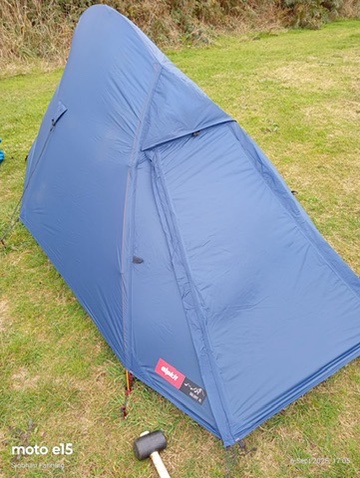
By day four, my body was sending signals I couldn’t ignore. At Sclerder Abbey, I asked if I could rest and leave in the late afternoon instead of pushing through with an early start. For those of us managing auto-immune conditions, tension is often the first sign of fatigue and inflammation building. That afternoon of rest, combined with a nap, a shorter walk, and time for yoga before slipping into my tent that evening, made all the difference.
I discovered that with a heavy load, around 10 kilometers was my current maximum, with shorter days needed too. Some experienced hikers might sniff at this, but I’m not your average hiker. The joy has been discovering what I’m capable of and finding the fine balance between hard and soft edges—avoiding the boom and bust cycle that’s typical with chronic health conditions.
My routine became essential: breaks every 50 minutes throughout the day with yoga, mobility work in my 10-minute breaks or simply lying down to rest. And at least 30-40 minutes for lunch. It takes discipline to stick to this schedule but after nearly 20 years of managing Sjögren’s Syndrome, I wanted to complete this trek without crashing at the end of it.
Angels on the Path
Day six brought steep climbs and a dodgy stomach, but also moments of grace. When I thought I’d lost my phone on the coastal path an angel appeared out of the blue and we discovered it had got stuck in my Osprey rain cover. About two kilometres from my destination, after crawling up a particularly steep climb, I was resting and probably looking exhausted when Roo Pane (yes, the singer-songwriter) scrambled up the same cliff and asked if I needed help.
Sometimes you don’t realize you need help until you’re asked. I glanced at the remaining climbs along the coastline and succumbed to his offer of a drive—only a kilometer by road. It was a reminder that accepting kindness isn’t weakness; it’s wisdom.
The Wisdom of Small Creatures
By day eight, as I began winding down toward the end of this pilgrimage, I found myself mesmerized by a tiny crawler making its way across the path. It became a perfect teacher for where I was in my journey. Sometimes the path asks us to slow right down, to move as deliberately as this tiny creature. I was learning to honour my body’s need for recovery and my spirit’s need for gentle pace. There’s profound wisdom in meandering.
History, Coffee, and Small Victories
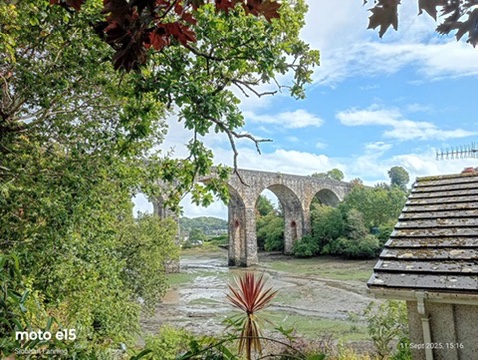
Saltash brought a gentler day—a long, slow walk rather than a forced march. The town is steeped in history, and Brunel’s Royal Albert Bridge loomed through the rain, an epic structure with nineteen arches spanning over 2,240 feet, built back in 1859. It’s the kind of thing that makes you feel small in the best possible way.
And then came the moment of pure bliss: a tiny, independent coffee shop. That first sip of perfectly brewed coffee was like a liquid hug, melting away the damp chill. Coffee became a recurring theme of my journey—not just for the caffeine, but as markers of civilization, warmth, and brief respite. However, on some days, I couldn’t find coffee shops at all, which made each discovery even sweeter.
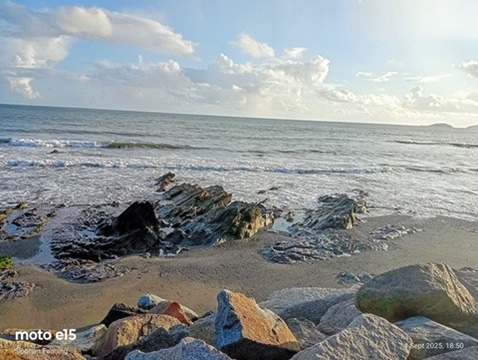
Later, sitting at Seaton beach with yet another coffee, I found myself willing a bus to appear, damning my backpack, feeling sorry for my poor hips, and reminding myself: this is the point of a pilgrimage route. Success always involves sacrifice.
What the Path Taught Me
The lessons came thick and fast:
- My natural enthusiasm wanes after about 48 hours under pressure, then reality checks in and I have the option to give up or step up.
- It takes a coffee, some inspirational reading, and 30 minutes to get me back on track
- Hip flexors can take serious punishment and the next morning be like: “Right, what’s on today’s agenda? We got this.”
- Don’t start your hike on a wet beach with a heavy rucksack—take the road because your muscles aren’t warmed up yet.
- There is no greater sound than wind and waves and only that—no traffic, no people.
- Make GPS your friend; learn to love that they can be erratic and even disappear, but they always come back.
- A quick dip in the sea refreshes the parts other things can’t reach.
- Packing up a tent in heavy rain, walking in it, then setting it up again in the rain is not much fun—but you do it anyway.
- Always rest where you can, not where you should.
And perhaps most importantly: go easy on yourself. This was my first time carrying it all—camping gear, food, everything. My siblings can attest that I’ve always been an indoor creature, so this was one big experiment to see how mind and body hold up to this type of solo travel.
The Real Obstacles, The Real Solutions
Every day brought obstacles. On day five, it was water—flooded paths and relentless rain. But there’s always a solution. On days when there was no place to rest except the edge of a road, I rested anyway. I learned to know my energy levels and honour them.
The village of Lansallos taught me that sometimes you arrive somewhere that has no coffee shop, no pub, nowhere that serves food. You make do with what you have. I had about two days of food left and hoped to meet shops soon.
What shocked me most? That I kept going. Day after day, feeling somewhat surprised that I was still doing it.
Gratitude and Grace
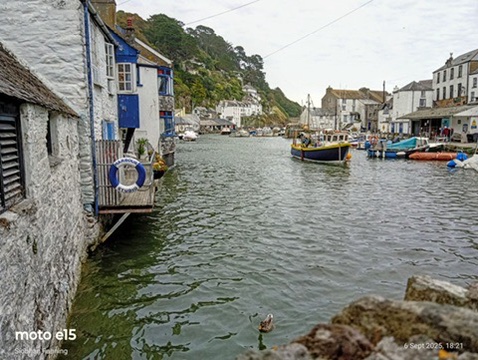
Throughout the journey, strangers became angels. On quiet roads where only two cars passed all day, both stopped to check I was okay. Village halls with stunning harbour views provided shelter. Sclerder Abbey offered not just a bed but the grace to rest on their beautiful grounds when my body demanded it.
The Cornish Celtic Way isn’t just a path through Cornwall—it’s a pilgrimage through your own limitations and capabilities. It strips away pretence and leaves you with the truth of what you can and cannot do, and the joy of discovering that the boundaries are more flexible than you imagined.
For Those Considering Their Own Journey
If you’re thinking about applying for an Adventure Queens grant or embarking on your own pilgrimage, here’s what I’d say: You won’t be fully prepared. Life will get in the way of your training plans. You’ll learn on the job. And that’s not just okay—it’s part of the journey.
The monotony is real. The rain is relentless. Your body will protest. But somewhere between the hard slogs and the moments of grace, between getting chased by heifers and being rescued by kind strangers, you’ll find something unexpected: yourself, stripped down to the essentials, still walking, still learning, still going.
Sometimes you just have to go for it.
To any woman with a huge, daunting, perhaps even medically complex adventure idea: Apply for the Adventure Queen’s Grant. Yes, a successful pilgrimage involves sacrifice—but the reward is discovering the magnificent endurance you carry within you.
With deep gratitude to Adventure Queens for making this pilgrimage possible, to Sclerder Abbey for their hospitality, and to all the sponsors: Komoot, Alpkit, Tentmeals, Vallon and Osprey. Their equipment helped support my poor bones on hard floors, in tents and everything in between.