
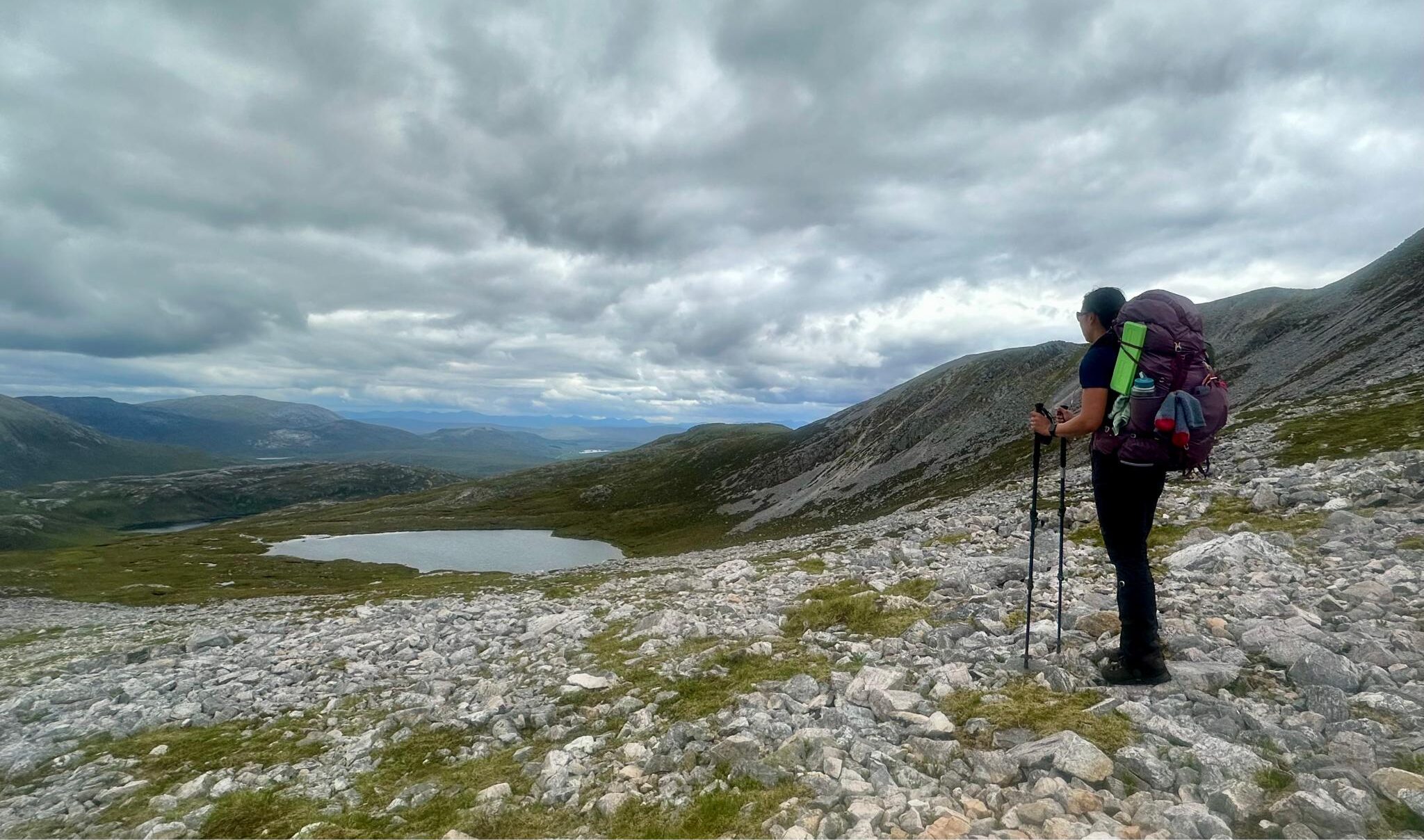
I applied for the Adventure Queen’s Grant on the back of one of the most traumatic experiences of my life. When that happened, I surprised myself by going on stage to tell the story. It was a strange time, and perhaps when I’ve experienced the worst, the things I would normally consider too daunting don’t seem quite so daunting anymore. Telling that story allowed me to reframe the experience for myself.
And clearly, pushing myself outside of my comfort zone was my way of processing the trauma.
It was around the same time that I applied for the Adventure Queens Grant and signed up for the Hackney Half. I was on the lookout for something to focus on, some way of getting out of my comfort zone and, perhaps in the process, some sort of breakthrough. The Cape Wrath Trail guidebook had been sitting on my shelves for several years, and I knew that with the support of the grant and the mentorship that came with it, I would be much more prepared than if I had tackled this on my own. The fact that the grant was supported by two of my favourite brands for outdoor gear, Osprey and Alpkit, made it all the more exciting!
Learning to Prepare
I am used to making impulsive decisions. At age 19, I threw myself onto my first ever Camino de Santiago with a week’s notice, with no training, no planning and probably most importantly, no time to overthink it and back out. I did the same for my second Camino, and then my first triathlon and first half marathon.
This was different. I knew the grant would change that. I would be held accountable for my progress as the hike approached.
With the help of Gee, my Adventure Queens mentor who became my accountability partner, I started training for the hike three months beforehand. This was a first for me. As London is pretty flat and going further afield to train wasn’t an option for me, I added training on the StairMaster and treadmill to my usual fitness routine to prepare for the hills.
As soon as my dates were finalised, I booked my one-way train journey up to Fort William. Not wanting to rush the journey, I left the trip open and took a month off work.
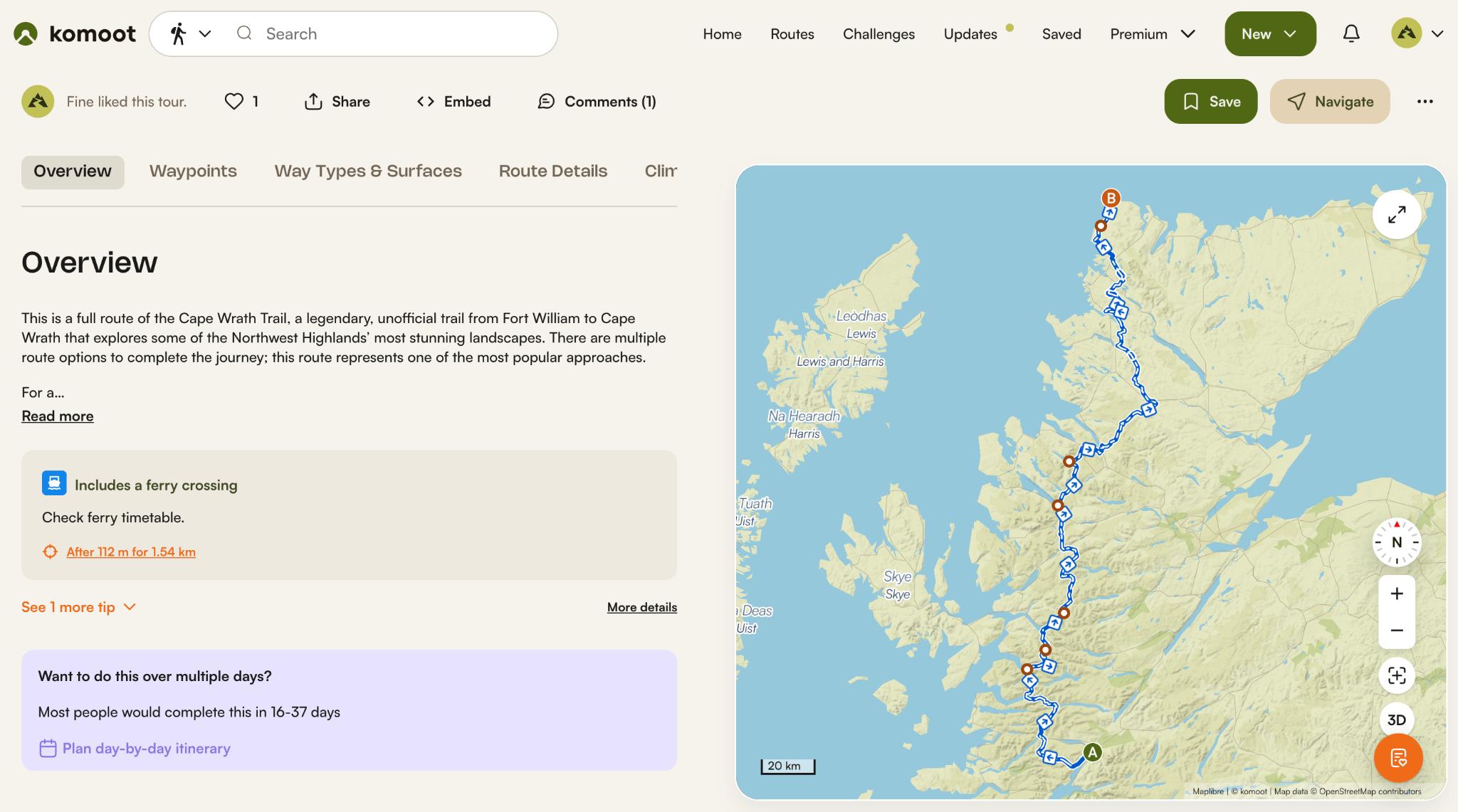
I began looking at the trail and planning the rough stages. Komoot was great for this. I was able to search for the trail on the app and use that as my existing template, and made it my own by adjusting the days depending on where I wanted to camp. I wanted to primarily wild camp on this trip, so I scouted out potential camping locations with good water supplies and maybe a good view if weather holds up. I also started researching resupply points and working out how much food I would need to carry. I had done a few self-supported long-distance hikes in the past, but none of them had been nearly as remote. Resupply points are few and far between on the Cape Wrath Trail, so I had to work out where I could top up or send myself parcels.
I wanted to learn to travel lighter, so I opted for a slightly smaller pack than my usual Osprey Aura 65L. The Osprey Eja 58L pack is also much lighter, and to my delight just as comfortable!
I was able to upgrade what I already had to lighter and better equipment from Alpkit with the grant too. I opted for the Drift camping pillow (so comfortable!), the super bright Qark head torch that I could charge up via USB or use batteries, the Mytipot 900, a pot/camp mug that was both lightweight and the perfect size for the trip, the Arlo Trowel (This was a dream – it is a metal trowel which was both strong and lightweight. I feel like this is such an under appreciated bit of kit! It was a real struggle to dig a good hole with my plastic one I had from another brand, and struggle is the last thing you need when you are desperate for the toilet!), more Alpkit socks which I already knew I loved (15 wet boot days and not a single blister – I have to credit the socks!), and most importantly the Carbonlong Backpacker hiking poles which were strong and lightweight, and would keep me safe in the boggiest terrain and through all of my river crossings.
With all the new kit for the trip, I made sure to try them all out and figured out the best way to pack my new Osprey Eja pack.
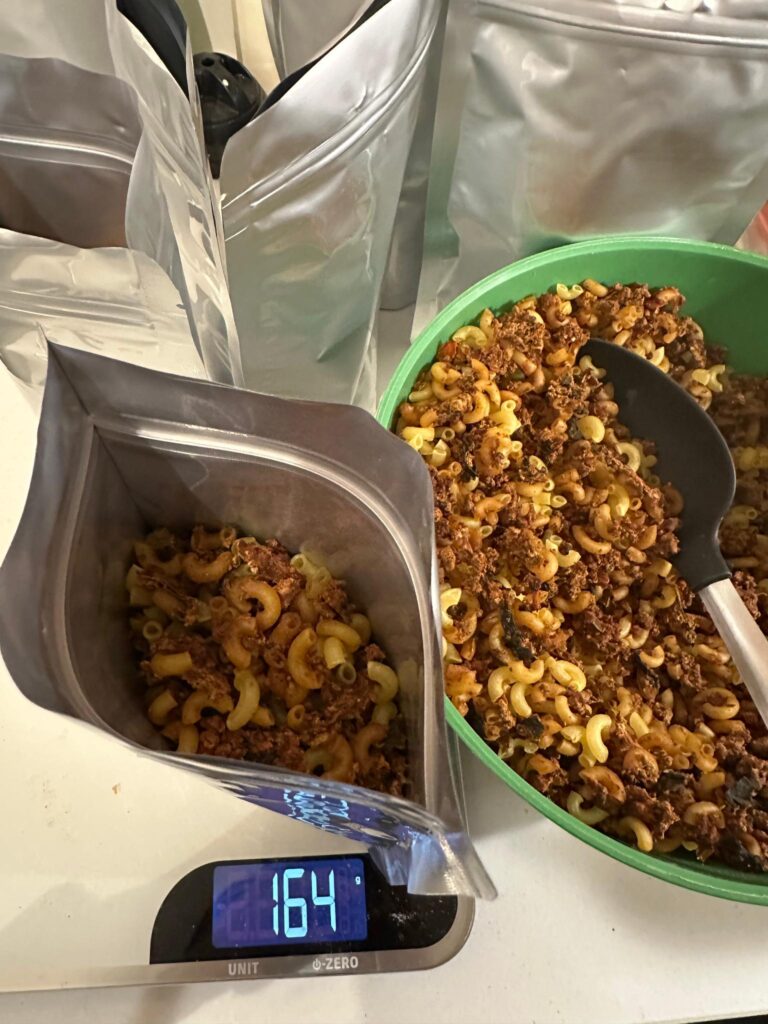
One thing about actually preparing for the hike, unlike all the others I had done, was that I had time to think about nutrition. Having newly acquired a dehydrator, I decided to have a go at dehydrating my own meals. This was not only great fun, but I really felt the benefit on the hike. Eating well made a huge difference to my digestion compared with how I normally feel on long hikes.
I had never been so organised!
I prepared around 14 breakfasts and 14 dinners to take on the Cape Wrath Trail. Three weeks before the hike I tested out my dehydrated meals on another camping trip. A week before the hike I ran my first half marathon that I had properly trained for. It was still hard, but for the first nine miles or so it felt really enjoyable, which was a first.
A few days before the hike, I sent myself food parcels at three resupply points.
And then I was off.
For the first time, I didn’t feel apprehensive about the challenge ahead. I felt prepared and ready for whatever came next.
The Beginning
My overnight train arrived into Fort William at 10am. With the ferry for Camusnagaul at 10:30, I had 30 minutes to get myself to the ferry pier, which would have been plenty if I headed straight there.
But on the way up to Scotland, I started wondering whether I had enough layers with me. I also noticed that one of my boot laces had been damaged by the increasingly sharp lace loops on my boots. So a quick visit to an outdoor shop was needed before I could get going. It would be 6 days before reaching Shiel Bridge where there are a few basic shops, and many more before the possibility of an outdoor shop, so having all the kit that I would need was crucial.
Luckily, Fort William is the ideal base for outdoor adventures, so I located a shop easily, got an extra merino layer and some laces, and off I went.
The journey to Camusnagaul didn’t take long.
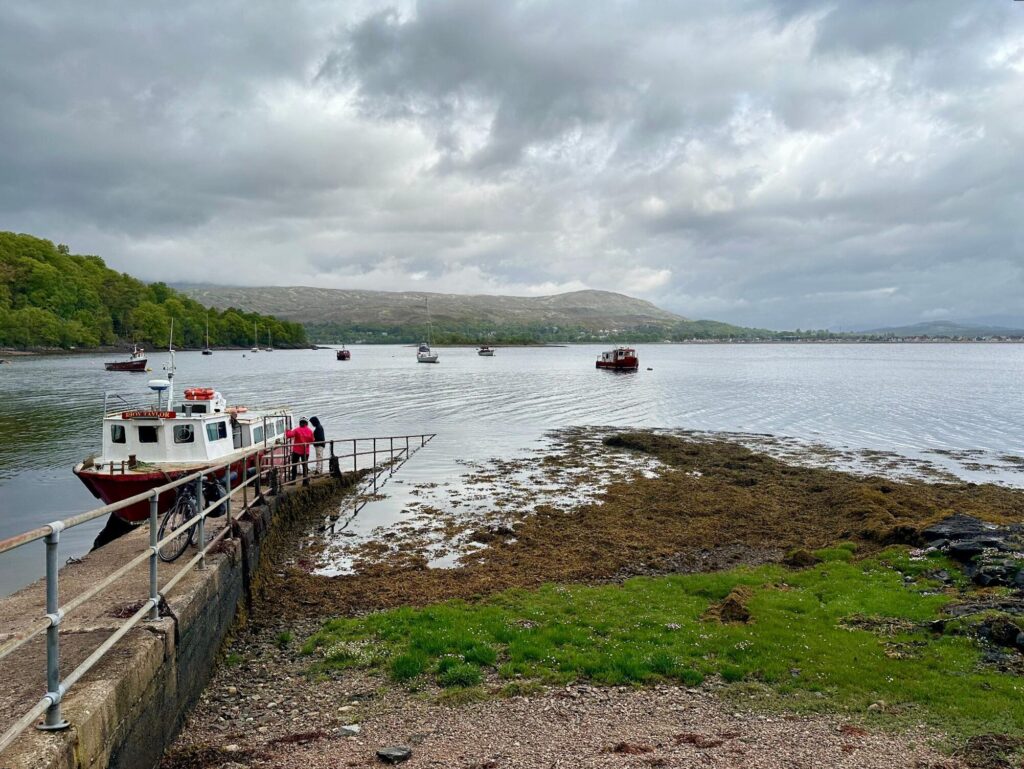
This is it! Having talked about doing the Cape Wrath Trail for a few years, and having prepared for the last few months, the adventure finally began.
The Cape Wrath Trail is not a single waymarked path. It winds its way through some of the most remote and rugged parts of the Scottish Highlands, linking existing paths, tracks and sections of rough, pathless terrain. On the first day, it felt deceptively easy. As I get the first twenty odd kilometres under my belt I wonder what all the fuss is about. It’s just another long distance hike. There were clear paths and solid ground. That was until the final few kilometres of the day where I got my first taste of the boggy terrain that was to come.
Day 2 was a different story. It was incredibly boggy with lots of river crossings. At one point as I tried to boulder-hop across a river, I slipped off the boulder. Luckily I caught myself before my backpack got submerged into the river. The good news was, the river wasn’t nearly as cold as I had expected.
Lots of what ifs enter my head when I am solo hiking. What if I slip and fall into the river, get injured, can’t get myself back up and die of hypothermia? Perhaps slightly overdramatic, but being alone in such remoteness sometimes felt very vulnerable, and worst-case scenarios don’t feel quite so far-fetched when there is no one else around. From then on, I would always make sure I had my layers on when crossing the higher and faster flowing rivers.
I stopped shortly after my fall to camp by the River Pean, slightly grumpy that I was now half wet and my boots were unlikely to dry any time soon. I would soon learn that between the bogs, the river crossings and the rain, my boots had little chance of staying dry this trip and wet boots would just be my new norm.
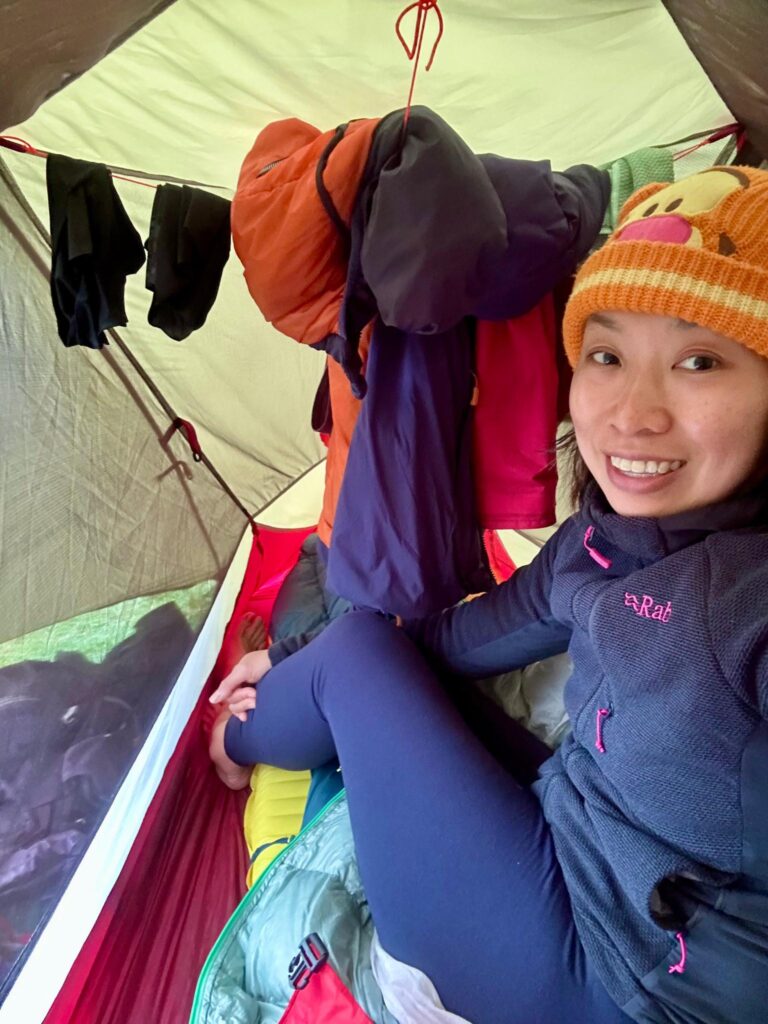
On day 3 I made my way into the Knoydart, an area known for its rough terrain, passing the Sourlies bothy and crossing paths with a fair few hikers headed for the most remote pub on the UK mainland in Inverie. It was drizzly all day and it didn’t take long before all my clothes were wet. It was so boggy that there wasn’t much time to think. The terrain required all my focus on my foot work. I would poke the ground with my poles to make sure it was firm before stepping on it. It was like navigating a dangerous mine field.
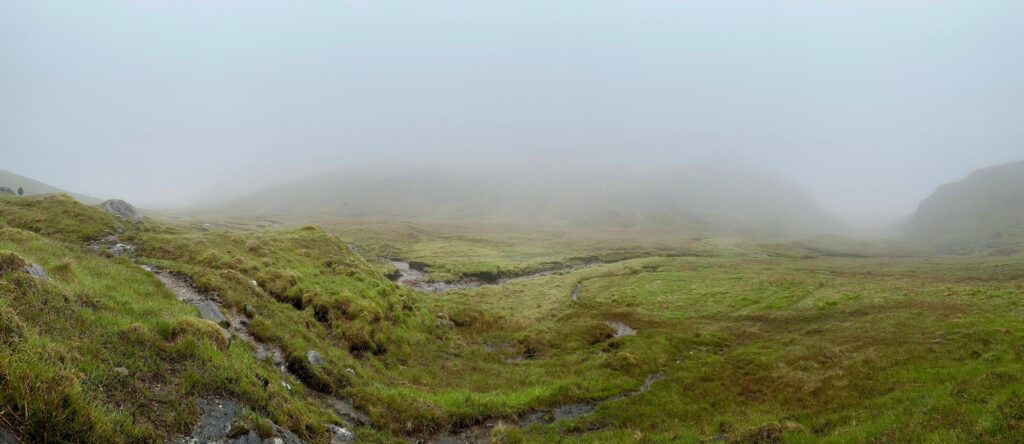
I am often asked why I go on long distance solo hikes, what do I get out of it? I sometimes start asking myself this too when it gets difficult! Why do I choose this as my holiday instead of what normal people do, something relaxing perhaps?! I guess I want to know that I am capable of hard things. That I can motivate myself in the most desperate of times. It’s easy when there are others around, but can I speak to myself as kindly as I would to others? Can I still find joy when things get tough? Can I trust my own abilities to survive in the wild, navigate myself to safety, make good decisions and keep myself safe?
I find how I respond on a hike is often a mirror of how I respond to life’s more complicated challenges. But the simplicity of having one goal, with little to no distraction, helps me see my response more clearly and perhaps how I could improve it.
On the particularly hard days, when the terrain was so difficult that a couple of kilometres could take an hour, I learnt that no matter how difficult things are, I can take them one step at a time. And that is all I have to think about.
Just one small step, and another, and another, instead of allowing the enormity of the problem to overwhelm me. Small actions add up, and that was all I needed to do, a series of small actions….